The Rooms Without Cameras: Why Persuasion Still Happens Off the Record
There is a particular sound a room makes when it decides to keep listening. It is not applause. It is the small settle of coats, the creak of folding chairs, the moment a scattered murmur thins into something closer to attention. Anyone who speaks for a living knows that sound, and anyone who has chased it on camera knows it does not survive the transfer.
The Clip Economy Has Reached Its Ceiling
For the better part of a decade, American public speaking was graded on a curve set by the highlight reel. A single sentence, isolated and captioned, could travel farther than the forty minutes that gave it meaning. Speakers learned the grammar of the format: the emphatic triple, the pause calibrated for the edit, the line engineered to land inside nine seconds.
By 2026 that grammar has hardened into habit, and habits are expensive. Audiences have grown fluent in performance. They can distinguish between a speaker who is thinking and a speaker who is presenting the idea of thinking. The tell is rarely vocabulary. It is the conspicuous absence of risk.
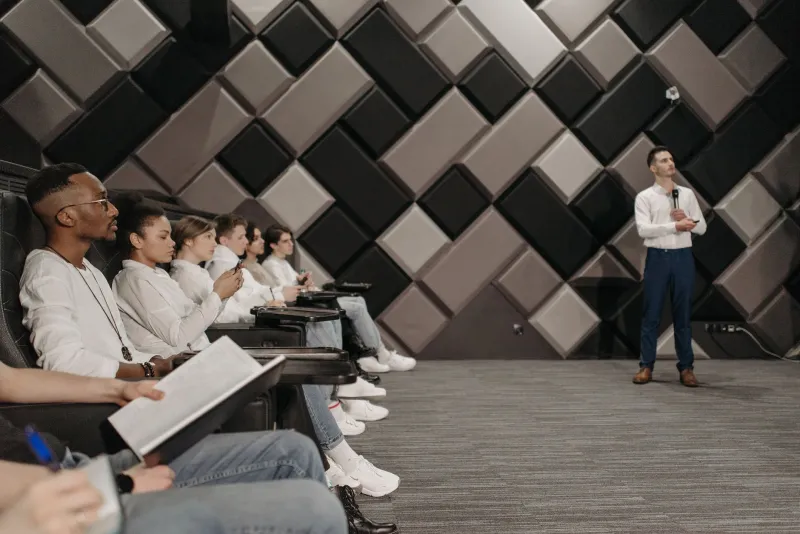
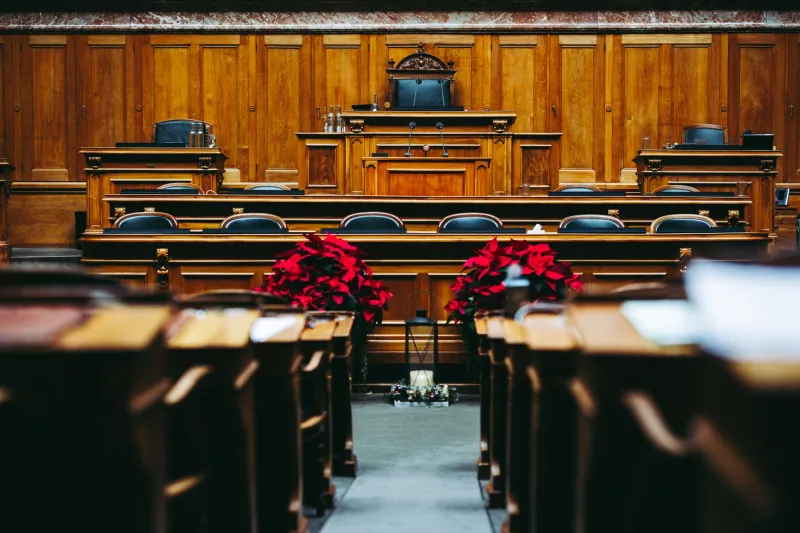
Meanwhile, the rooms where persuasion still changes outcomes have gone quiet on camera and loud in person. Zoning hearings that run past ten o'clock. Union halls where a contract ratification turns on a single question from the floor. Commencement tents where the speaker has eleven minutes, a faulty microphone, and no ability to edit. City councils, school boards, county commissions, library trustees, the borrowed conference rooms of nonprofit boards. These are the venues where a sentence can still cost something, because the people hearing it can answer back.
What the Absence of a Lens Does to Rhythm
A camera compresses time. It rewards the speaker who front-loads the thesis, lands the memorable clause early, and treats the middle as connective tissue. An unrecorded room rewards the opposite. It rewards the speaker willing to build slowly, to let an argument assemble itself in the audience's hands, to spend two minutes on a fact that will never trend.
Watch a competent speaker at a county planning meeting and you will see a rhythm that has nearly vanished from the stage: statement, small silence, qualification, smaller silence, direct address to a named person in the third row. The pacing is not slack. It is responsive. The speaker is reading a room in real time and adjusting, which is precisely the skill that a fixed camera discourages, because a fixed camera cannot be read.
The practical consequence is uncomfortable for anyone raised on optics. When no one is filming, there is no reason to perform confidence. There is only the question of whether the argument holds. That is a lower-status posture than the one most speakers are trained into, and it is more persuasive.
Risk Tolerance and the Freedom to Be Unimpressive
Off-camera speaking expands what a speaker is willing to say, and the expansion is not trivial. In an unrecorded room, a leader can concede a point without generating a permanent artifact of concession. An elected official can tell a hostile audience that a proposal is flawed and still worth passing. A hospital administrator can say, plainly, that the previous plan failed. A labor negotiator can acknowledge what the other side got right.
These are the moves that build credibility, and they are almost impossible to make inside a clip. The permanent record does not merely raise the cost of error; it raises the cost of nuance. Speakers who work only for the record learn to be defensible rather than persuasive.
The corollary matters for anyone advising leaders in 2026: the unrecorded room is not a lesser venue where the real work is done in private. It is a distinct discipline with its own physics, and fluency in it does not transfer automatically from stagecraft.
The Audience as Participant Rather Than Distribution
Something else changes when the recording stops. The audience stops being an eventual public and becomes a present one. Questions arrive without preamble. Interruptions are permitted by custom rather than tolerated by moderation. The speaker's credibility is settled by how they handle a heckler, a factual challenge, or a plea from someone who has waited three hours for two minutes at a microphone.
Speakers who thrive in these conditions tend to share three habits. They prepare positions rather than scripts. They know the specific grievance of the specific room before they enter it. And they are willing to be interrupted without treating the interruption as an attack on their authority.
Four Lessons for Leaders Who Still Want the Highlight
The temptation, of course, is to extract the highlight anyway. A leader finishes a strong forty minutes at a school board meeting and immediately asks whether the best two sentences can be posted. They can. But the extraction should be the byproduct, never the design.
First, rehearse for the room and not the clip. That means preparing for the third question, the hostile amendment, and the person who has been attending these meetings for nine years. The viral line, if it comes, will come from competence under pressure.
Second, build in the unwritten. Leave a section of any significant address that exists only in the delivery. A paragraph of response. An acknowledgment of someone in the room whose name you learned that morning. These passages cannot be circulated, which is precisely what makes them credible.
Third, measure by decisions rather than views. Did the zoning variance pass? Did the contract ratify? Did the district change the start time? The clip economy offers no metric for whether a room was moved, which is convenient for speakers who would rather not know.
Fourth, learn to end without a punchline. The most durable endings in unrecorded rooms are administrative: here is what happens next, here is who to contact, here is when we meet again. Not memorable. Effective.
The Long Half-Life of Words Nobody Filmed
The rhetorical history of the United States is often told through recordings, which is a distortion of convenience. Much of the persuasion that built institutions happened in grange halls, parish basements, and courthouse squares with no one taking notes. The speeches we remember are the ones that were written down, and writing down was never the same thing as mattering.
In 2026, with the archive infinite and the attention finite, that distinction has become almost radical. The speaker who can move a room no one is filming is practicing the oldest and least fashionable form of the craft. They are also, quietly, the ones getting things done.