Sacred Ground and the Spoken Word: Seven American Venues That Gave History Its Voice
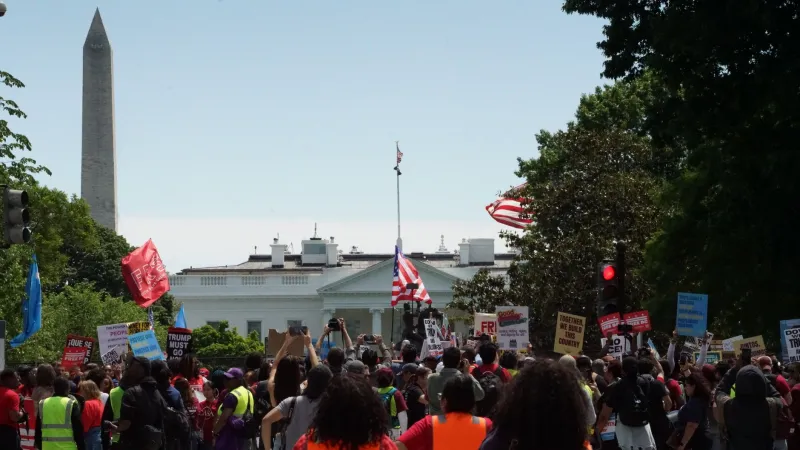
When we study the great speeches of American history, we tend to focus on the words—the cadence of a sentence, the precision of a metaphor, the courage of a declaration. What we examine less often is the ground on which those words were spoken. Yet the venue, in many of the most consequential moments in American public discourse, was not merely a backdrop. It was a participant.
The relationship between a speaker and their setting is one of the most underappreciated elements of rhetorical power. A speech that might read as competent in a conference room can become transcendent when delivered before the right crowd, in the right place, at the right moment in history. The following seven venues did not simply host great speeches—they helped create them.
1. The Lincoln Memorial Steps, Washington, D.C. — August 28, 1963
No American venue carries a more concentrated symbolic charge than the steps of the Lincoln Memorial, and no speech delivered there demonstrated that charge more fully than Martin Luther King Jr.'s address during the March on Washington. The choice of this location was not accidental—it was a deliberate act of rhetorical framing that placed the civil rights movement in direct conversation with the unfinished promise of Emancipation.
King stood in the shadow of a seated Abraham Lincoln, speaking to a crowd of more than 250,000 people gathered on the National Mall. The physical scale of the setting demanded a speech of equivalent magnitude. The acoustics—aided by a substantial public address system—carried his voice across an expanse that itself embodied the breadth of the cause. When King departed from his prepared remarks and began the passage that would become the speech's legacy, he was responding not just to the moment but to the place. The Lincoln Memorial did not merely frame that speech. It called it forth.
2. Gettysburg, Pennsylvania — November 19, 1863
Abraham Lincoln was not the featured speaker at the dedication of the Soldiers' National Cemetery at Gettysburg. That distinction belonged to Edward Everett, a celebrated orator of the era who delivered a two-hour address that has been almost entirely forgotten. Lincoln spoke for approximately two minutes. The brevity was, in part, a product of the venue itself.
Gettysburg was not a stage designed for political theater. It was a field of graves, still fresh, where 51,000 men had fallen in three days of combat just four months earlier. The solemnity of that ground imposed a discipline on Lincoln's language that produced one of the most compressed and powerful speeches in the English language. He understood instinctively that the setting demanded restraint, and that restraint became his greatest rhetorical tool.
3. The Cow Palace, San Francisco — July 16, 1964
The Cow Palace—formally the California State Livestock Pavilion—was an unlikely setting for one of the most politically consequential speeches in modern Republican Party history. But when Barry Goldwater accepted the Republican presidential nomination there in the summer of 1964, the arena's raw, functional character suited the uncompromising nature of his message.
Goldwater's declaration that "extremism in the defense of liberty is no vice" ignited a firestorm, but what is less often discussed is how the venue amplified the moment. The Cow Palace was a working arena, not a gilded convention hall, and the crowd it contained was one of the most ideologically charged in party convention history. The acoustics of the building—designed for livestock exhibitions, not political oratory—created an atmosphere of visceral intensity. The speech and the setting together announced a transformation in American conservatism that would take decades to fully unfold.
4. Independence Hall, Philadelphia — July 4, 1776 and Beyond
Independence Hall occupies a unique position in the American rhetorical imagination because it has served as a meaningful venue across multiple centuries. The adoption of the Declaration of Independence within its walls established it as the symbolic birthplace of American civic identity. Subsequent speakers who have invoked or appeared at Independence Hall have drawn, consciously or not, on that accumulated authority.
The physical scale of Independence Hall is, by modern standards, intimate. It was designed for deliberation, not declaration—a space that rewards careful argument over theatrical gesture. Speakers who have used it effectively have understood this, modulating their register to match the building's character. The venue teaches a lesson that applies broadly: the most powerful settings are not always the largest ones.
5. The United States Capitol Steps — January 20, 1961
John F. Kennedy's inaugural address is among the most frequently analyzed speeches in American political history. Less attention is typically paid to how the Capitol's eastern steps functioned as an instrument of the speech's meaning. Kennedy stood at the seat of American democratic power, speaking on one of the coldest inauguration days on record, and the setting amplified every element of his generational argument.
The Capitol steps place a speaker in a precise symbolic relationship with the institutions they are invoking. Kennedy was not merely speaking about the transfer of power—he was standing inside it. The grandeur of the architecture behind him made his call to service feel like something more than rhetoric. It felt like a summons from the republic itself.
6. The Apollo Theater, Harlem, New York City
Not every transformative venue in American speech history belongs to the formal political tradition. The Apollo Theater in Harlem has served as a crucible for American communicative culture—a place where performers and speakers alike have faced some of the most discerning audiences in the country. The Apollo's tradition of rigorous audience response has shaped the communicative instincts of generations of American artists and public figures.
Politicians who have appeared at the Apollo have uniformly understood that the venue requires something different from the standard campaign register. The Apollo demands genuine engagement, not performed empathy. It has, over the decades, served as a remarkably accurate test of whether a public figure's connection to a community is real or constructed.
7. Normandy American Cemetery, France — June 6, 1984
The final venue on this list is, technically, on foreign soil—but it belongs in any American accounting of transformative speech settings. Ronald Reagan's fortieth-anniversary address at the Normandy American Cemetery, delivered among the graves of American servicemen who died on D-Day, is a masterclass in how a speaker can use a physical environment as the primary text of their message.
Reagan barely needed to construct an argument. The setting made it for him. Row upon row of white crosses and Stars of David stretching across the Normandy bluffs provided a visual testimony that no speechwriter could have invented. His task was simply to speak in a register worthy of the ground—and he did.
The Lesson for Modern Speakers
The through-line connecting all seven of these venues is this: the most powerful speeches in American history were delivered by speakers who understood that they were not the only force in the room. The ground, the architecture, the assembled crowd, and the historical moment were all communicating alongside them.
Modern speakers who treat venue selection as a logistical detail rather than a rhetorical decision are leaving one of their most powerful tools unused. The right setting does not merely frame a message—it deepens it, authenticates it, and in the most extraordinary cases, ensures that it endures long after the speaker has left the stage.
At Davidson Speech, we hold that the words and the world they are spoken into are inseparable. Understanding that relationship is the beginning of understanding what makes a speech truly matter.